Play This Verse Study
Scripture • World English Bible
Acts 27:1–12
1When it was determined that we should sail for Italy, they delivered Paul and certain other prisoners to a centurion named Julius, of the Augustan band.
2Embarking in a ship of Adramyttium, which was about to sail to places on the coast of Asia, we put to sea, Aristarchus, a Macedonian of Thessalonica being with us.
3The next day, we touched at Sidon. Julius treated Paul kindly and gave him permission to go to his friends and refresh himself.
4Putting to sea from there, we sailed under the lee of Cyprus, because the winds were contrary.
5When we had sailed across the sea which is off Cilicia and Pamphylia, we came to Myra, a city of Lycia.
6There the centurion found a ship of Alexandria sailing for Italy, and he put us on board.
7When we had sailed slowly many days, and had come with difficulty opposite Cnidus, the wind not allowing us further, we sailed under the lee of Crete, opposite Salmone.
8With difficulty sailing along it we came to a certain place called Fair Havens, near the city of Lasea.
9When much time had passed and the voyage was now dangerous because the Fast had now already gone by, Paul admonished them
10and said to them, “Sirs, I perceive that the voyage will be with injury and much loss, not only of the cargo and the ship, but also of our lives.”
11But the centurion gave more heed to the master and to the owner of the ship than to those things which were spoken by Paul.
12Because the haven was not suitable to winter in, the majority advised going to sea from there, if by any means they could reach Phoenix and winter there, which is a port of Crete, looking southwest and northwest.
World English Bible (WEB) • Public Domain
Reflection
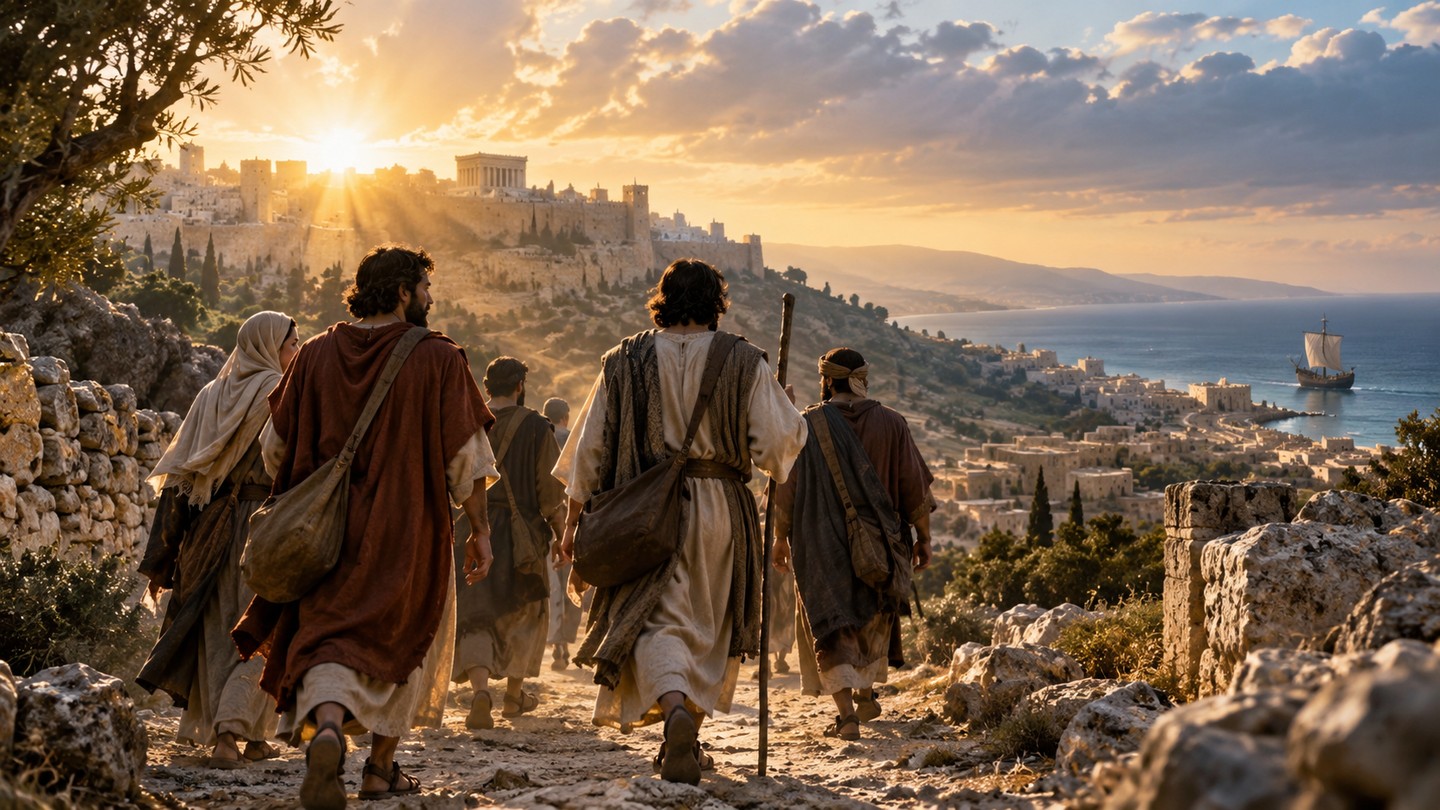
Paul is a prisoner on his way to Rome when the ship puts in at Fair Havens. Time presses on—the Fast has passed—and Paul sees danger ahead. He speaks plainly: the voyage will bring injury, loss, even death. His words carry urgency and care. Yet the centurion trusts the master of the ship and the owner more than Paul’s warning, and the majority decide to move on in search of a better harbor.
This short scene teaches three important truths about spiritual discernment and human decision-making. First, wisdom can come from unexpected places. Paul is under custody; he’s not the ship’s officer, and he has no maritime rank. But he has knowledge—observation of the season and the harbor—and prophetic discernment given by God through his experience and commitment to the mission. We should not dismiss a clear, God-fearing voice simply because it comes from someone with a lower human status.
Second, leadership often faces strong pressures—economic, reputational, emotional—that can drown out wise counsel. The centurion listens to the ship’s master and owner. Their practical concerns (profit, reputation, seamanship) and status carry weight. Leaders today can fall into the same trap: giving priority to voices that align with convenience, finances, or authority rather than weighing the full counsel of those who speak truth in love.
Third, speaking truth in the midst of danger requires courage and humility; being ignored requires trust and faithful stewardship. Paul doesn’t shout, he admonishes—he assesses the situation and warns. When his counsel is set aside, Paul does not polarize or withdraw from his calling. He continues to travel under guard, remaining faithful to his mission while trusting God with the outcome.
For Christians, Acts 27:1–12 invites us to cultivate discernment, to communicate warnings faithfully, and to create cultures where wise counsel is considered, not dismissed. It also prepares us for the reality that sometimes our honest warnings will be ignored. When that happens, we are called to do three things: make our case plainly and lovingly, continue to serve faithfully, and entrust the outcome to God who sees and holds our lives.
Our warnings should be rooted in prayer, reason, and love—not pride. Leaders should welcome diverse counsel and test it against Scripture and the welfare of those in their care. And when our wise warnings are ignored, we should not lose heart; God remains sovereign, and He can use even poor decisions to accomplish His purposes if we remain faithful and obedient.
Putting Faith Into Action
- If you see danger, speak clearly and lovingly: state your concern, give reasons, suggest alternatives, and invite discussion rather than demanding compliance.
- If you lead, adopt the discipline of weighing counsel: listen to those with practical expertise and to those who bring a godly, principled perspective—even if they lack your rank or influence.
- If your warnings are ignored, do what you responsibly can to prepare, continue in faithful service, and entrust the outcome to God instead of becoming bitter or withdrawing your witness.
Prayer
Lord Jesus, give me courage to speak the truth in love, humility to listen to wise counsel, and trust to rest in Your care when my warnings are not heeded. Help leaders to value godly voices, and help those ignored to remain faithful. Amen.
Memory Verse
Acts 27:10 — and said to them, “Sirs, I perceive that the voyage will be with injury and much loss, not only of the cargo and the ship, but also of our lives.” (WEB)
“and said to them, “Sirs, I perceive that the voyage will be with injury and much loss, not only of the cargo and the ship, but also of our lives.””
Bible Context
Read all of Acts 27
+
Bible Context
Read all of Acts 27
Acts 27
World English Bible • WEB
1When it was determined that we should sail for Italy, they delivered Paul and certain other prisoners to a centurion named Julius, of the Augustan band.
2Embarking in a ship of Adramyttium, which was about to sail to places on the coast of Asia, we put to sea, Aristarchus, a Macedonian of Thessalonica being with us.
3The next day, we touched at Sidon. Julius treated Paul kindly and gave him permission to go to his friends and refresh himself.
4Putting to sea from there, we sailed under the lee of Cyprus, because the winds were contrary.
5When we had sailed across the sea which is off Cilicia and Pamphylia, we came to Myra, a city of Lycia.
6There the centurion found a ship of Alexandria sailing for Italy, and he put us on board.
7When we had sailed slowly many days, and had come with difficulty opposite Cnidus, the wind not allowing us further, we sailed under the lee of Crete, opposite Salmone.
8With difficulty sailing along it we came to a certain place called Fair Havens, near the city of Lasea.
9When much time had passed and the voyage was now dangerous because the Fast had now already gone by, Paul admonished them
10and said to them, “Sirs, I perceive that the voyage will be with injury and much loss, not only of the cargo and the ship, but also of our lives.”
11But the centurion gave more heed to the master and to the owner of the ship than to those things which were spoken by Paul.
12Because the haven was not suitable to winter in, the majority advised going to sea from there, if by any means they could reach Phoenix and winter there, which is a port of Crete, looking southwest and northwest.
13When the south wind blew softly, supposing that they had obtained their purpose, they weighed anchor and sailed along Crete, close to shore.
14But before long, a stormy wind beat down from shore, which is called Euroclydon.
15When the ship was caught and couldn’t face the wind, we gave way to it and were driven along.
16Running under the lee of a small island called Clauda, we were able, with difficulty, to secure the boat.
17After they had hoisted it up, they used cables to help reinforce the ship. Fearing that they would run aground on the Syrtis sand bars, they lowered the sea anchor, and so were driven along.
18As we labored exceedingly with the storm, the next day they began to throw things overboard.
19On the third day, they threw out the ship’s tackle with their own hands.
20When neither sun nor stars shone on us for many days, and no small storm pressed on us, all hope that we would be saved was now taken away.
21When they had been long without food, Paul stood up in the middle of them and said, “Sirs, you should have listened to me, and not have set sail from Crete and have gotten this injury and loss.
22Now I exhort you to cheer up, for there will be no loss of life among you, but only of the ship.
23For there stood by me this night an angel, belonging to the God whose I am and whom I serve,
24saying, ‘Don’t be afraid, Paul. You must stand before Caesar. Behold, God has granted you all those who sail with you.’
25Therefore, sirs, cheer up! For I believe God, that it will be just as it has been spoken to me.
26But we must run aground on a certain island.”
27But when the fourteenth night had come, as we were driven back and forth in the Adriatic Sea, about midnight the sailors surmised that they were drawing near to some land.
28They took soundings and found twenty fathoms. After a little while, they took soundings again, and found fifteen fathoms.
29Fearing that we would run aground on rocky ground, they let go four anchors from the stern, and wished for daylight.
30As the sailors were trying to flee out of the ship and had lowered the boat into the sea, pretending that they would lay out anchors from the bow,
31Paul said to the centurion and to the soldiers, “Unless these stay in the ship, you can’t be saved.”
32Then the soldiers cut away the ropes of the boat and let it fall off.
33While the day was coming on, Paul begged them all to take some food, saying, “Today is the fourteenth day that you wait and continue fasting, having taken nothing.
34Therefore I beg you to take some food, for this is for your safety; for not a hair will perish from any of your heads.”
35When he had said this and had taken bread, he gave thanks to God in the presence of all; then he broke it and began to eat.
36Then they all cheered up, and they also took food.
37In all, we were two hundred seventy-six souls on the ship.
38When they had eaten enough, they lightened the ship, throwing out the wheat into the sea.
39When it was day, they didn’t recognize the land, but they noticed a certain bay with a beach, and they decided to try to drive the ship onto it.
40Casting off the anchors, they left them in the sea, at the same time untying the rudder ropes. Hoisting up the foresail to the wind, they made for the beach.
41But coming to a place where two seas met, they ran the vessel aground. The bow struck and remained immovable, but the stern began to break up by the violence of the waves.
42The soldiers’ counsel was to kill the prisoners, so that none of them would swim out and escape.
43But the centurion, desiring to save Paul, stopped them from their purpose, and commanded that those who could swim should throw themselves overboard first to go toward the land;
44and the rest should follow, some on planks and some on other things from the ship. So they all escaped safely to the land.
World English Bible (WEB) • Public Domain
Share Frontline Faith
Share this devotional
Copy the public link to share this devotional.