Play This Verse Study
Scripture • World English Bible
Acts 23:23–35
23He called to himself two of the centurions, and said, “Prepare two hundred soldiers to go as far as Caesarea, with seventy horsemen and two hundred men armed with spears, at the third hour of the night.”
24He asked them to provide mounts, that they might set Paul on one, and bring him safely to Felix the governor.
25He wrote a letter like this:
26“Claudius Lysias to the most excellent governor Felix: Greetings.
27“This man was seized by the Jews, and was about to be killed by them when I came with the soldiers and rescued him, having learned that he was a Roman.
28Desiring to know the cause why they accused him, I brought him down to their council.
29I found him to be accused about questions of their law, but not to be charged with anything worthy of death or of imprisonment.
30When I was told that the Jews lay in wait for the man, I sent him to you immediately, charging his accusers also to bring their accusations against him before you. Farewell.”
31So the soldiers, carrying out their orders, took Paul and brought him by night to Antipatris.
32But on the next day they left the horsemen to go with him, and returned to the barracks.
33When they came to Caesarea and delivered the letter to the governor, they also presented Paul to him.
34When the governor had read it, he asked what province he was from. When he understood that he was from Cilicia, he said,
35“I will hear you fully when your accusers also arrive.” He commanded that he be kept in Herod’s palace.
World English Bible (WEB) • Public Domain
Reflection
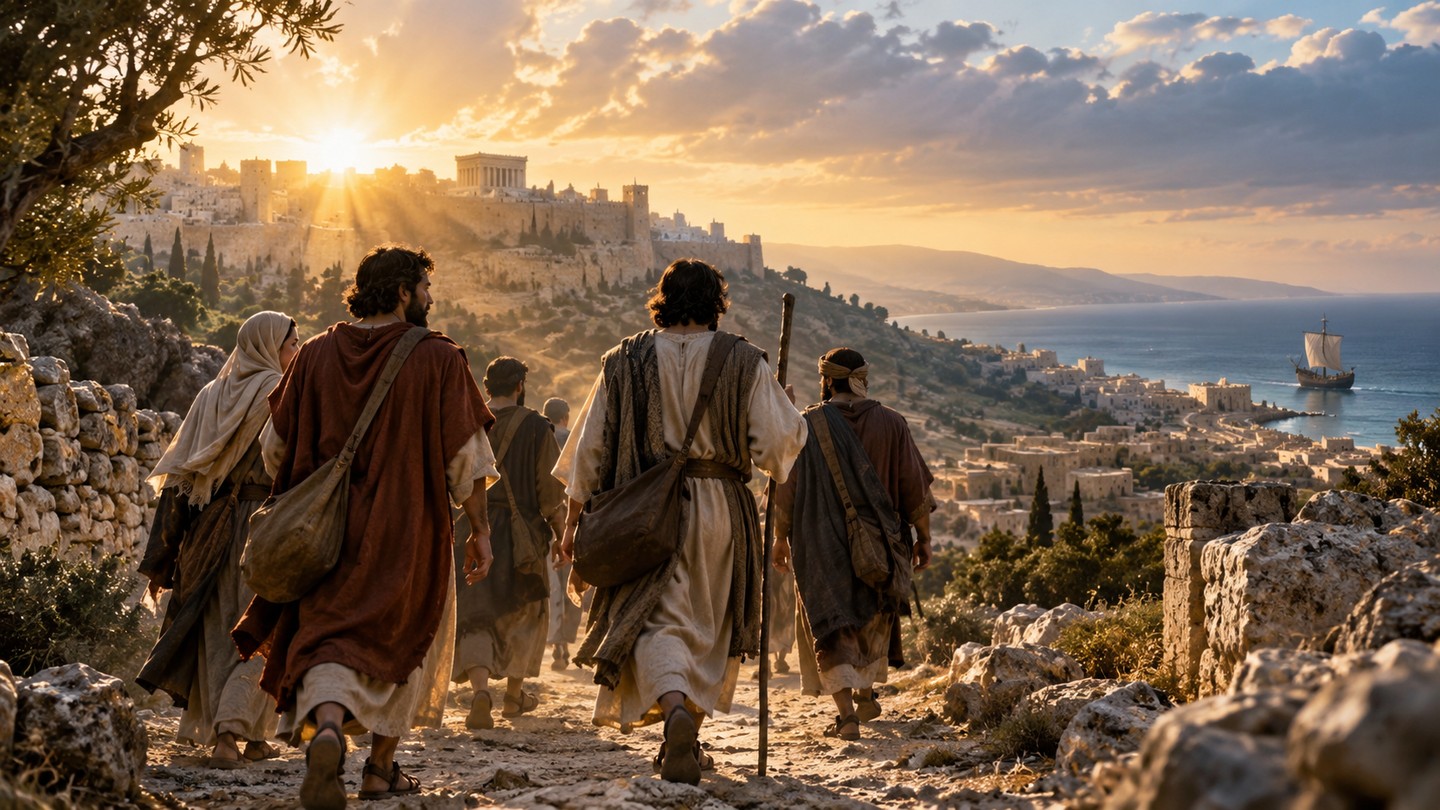
The scene in Acts 23:23–35 reads like a precise rescue plan: a commander mobilizes troops at night, mounts are provided, a careful escort moves Paul away from a deadly conspiracy, and a formal letter accompanies him to the governor. Behind these military details is a deeper story of God’s providence working through ordinary people and institutions to preserve His servant and to open a lawful stage for the gospel.
Paul’s situation was dangerous. He stood in the middle of bitter religious conflict, and a plot to kill him had been uncovered. Instead of relying on force or fleeing alone, God used a Roman officer who respected legal rights and the rule of law. Lysias acted responsibly: he protected Paul, documented what had happened, and sent him to the proper authority with instructions and a letter that clarified the circumstances. What looks like tactical maneuvering in human terms is, in biblical terms, God’s protection arranged through faithful, practical action.
This passage helps us hold two truths together. First, God is sovereign and cares for His people. He preserves His servants not by promising an easy life but by working through events and people to carry out His purposes. Second, God often protects and advances His work through ordinary, lawful means—through written words, orderly procedures, and people who do their duty. Paul was not miraculously transported away; he was escorted by soldiers and presented to a governor. God’s care frequently comes in ways that ask us to act wisely and humbly within the structures He allows.
There is also pastoral comfort here. When we feel threatened, God does not abandon us to chaos. He may provide protection that looks like paperwork, a timely friend, an advocate who knows the rules, or a simple place of safety. At the same time, the passage challenges us to prepare for trustworthy witness when God makes a safe space. The governor’s willingness to hear Paul when the accusers arrived meant Paul’s testimony could be given in an official setting. Protection and opportunity for witness went hand in hand.
So what should we take from this for ordinary Christian life? We do not chase control or manipulate authorities, but we do seek safety responsibly, honor lawful processes, and be ready to speak for Christ when God opens doors. We pray for those in positions of responsibility, ask God to guide practical decisions, and cultivate a readiness to give an answer for the hope we have. Protection may come as shelter, as a voice that speaks up for us, or as an unexpected opening to declare the gospel. In all of it, we remember that God’s purposes are bigger than our immediate troubles and that He is at work even when the solution looks mundane.
Let this passage encourage you: God can protect you on the way to whatever task He has called you to. He uses people, systems, and small acts of faithfulness to keep His servants and to open opportunities for witness. Walk humbly, act wisely, and be ready to speak when God gives the chance.
Putting Faith Into Action
- Pray for and respect lawful means of protection: if you face real danger, seek help through appropriate authorities, trusted leaders, or the church while trusting God to care for you.
- Prepare a brief, clear testimony and a calm way to explain your faith so you can speak confidently when God opens a lawful or safe opportunity to witness.
- Pray for people in authority and look for ways God might use them to protect or open doors for the gospel; thank God when He provides help through ordinary channels.
Prayer
Lord, thank you that you watch over your servants and can work through ordinary people and lawful means to protect us. Give us wisdom to seek help rightly, courage to testify when you open the door, and peace to trust your providence in uncertainty. Use our lives for your glory. Amen.
Memory Verse
Acts 23:24 — He asked them to provide mounts, that they might set Paul on one, and bring him safely to Felix the governor. (WEB)
“He asked them to provide mounts, that they might set Paul on one, and bring him safely to Felix the governor.”
Bible Context
Read all of Acts 23
+
Bible Context
Read all of Acts 23
Acts 23
World English Bible • WEB
1Paul, looking steadfastly at the council, said, “Brothers, I have lived before God in all good conscience until today.”
2The high priest, Ananias, commanded those who stood by him to strike him on the mouth.
3Then Paul said to him, “God will strike you, you whitewashed wall! Do you sit to judge me according to the law, and command me to be struck contrary to the law?”
4Those who stood by said, “Do you malign God’s high priest?”
5Paul said, “I didn’t know, brothers, that he was high priest. For it is written, ‘You shall not speak evil of a ruler of your people.’ ”
6But when Paul perceived that the one part were Sadducees and the other Pharisees, he cried out in the council, “Men and brothers, I am a Pharisee, a son of Pharisees. Concerning the hope and resurrection of the dead I am being judged!”
7When he had said this, an argument arose between the Pharisees and Sadducees, and the crowd was divided.
8For the Sadducees say that there is no resurrection, nor angel, nor spirit; but the Pharisees confess all of these.
9A great clamor arose, and some of the scribes of the Pharisees’ part stood up, and contended, saying, “We find no evil in this man. But if a spirit or angel has spoken to him, let’s not fight against God!”
10When a great argument arose, the commanding officer, fearing that Paul would be torn in pieces by them, commanded the soldiers to go down and take him by force from among them and bring him into the barracks.
11The following night, the Lord stood by him and said, “Cheer up, Paul, for as you have testified about me at Jerusalem, so you must testify also at Rome.”
12When it was day, some of the Jews banded together and bound themselves under a curse, saying that they would neither eat nor drink until they had killed Paul.
13There were more than forty people who had made this conspiracy.
14They came to the chief priests and the elders, and said, “We have bound ourselves under a great curse to taste nothing until we have killed Paul.
15Now therefore, you with the council inform the commanding officer that he should bring him down to you tomorrow, as though you were going to judge his case more exactly. We are ready to kill him before he comes near.”
16But Paul’s sister’s son heard they were lying in wait, and he came and entered into the barracks and told Paul.
17Paul summoned one of the centurions and said, “Bring this young man to the commanding officer, for he has something to tell him.”
18So he took him and brought him to the commanding officer and said, “Paul, the prisoner, summoned me and asked me to bring this young man to you. He has something to tell you.”
19The commanding officer took him by the hand, and going aside, asked him privately, “What is it that you have to tell me?”
20He said, “The Jews have agreed to ask you to bring Paul down to the council tomorrow, as though intending to inquire somewhat more accurately concerning him.
21Therefore don’t yield to them, for more than forty men lie in wait for him, who have bound themselves under a curse to neither eat nor drink until they have killed him. Now they are ready, looking for the promise from you.”
22So the commanding officer let the young man go, charging him, “Tell no one that you have revealed these things to me.”
23He called to himself two of the centurions, and said, “Prepare two hundred soldiers to go as far as Caesarea, with seventy horsemen and two hundred men armed with spears, at the third hour of the night.”
24He asked them to provide mounts, that they might set Paul on one, and bring him safely to Felix the governor.
25He wrote a letter like this:
26“Claudius Lysias to the most excellent governor Felix: Greetings.
27“This man was seized by the Jews, and was about to be killed by them when I came with the soldiers and rescued him, having learned that he was a Roman.
28Desiring to know the cause why they accused him, I brought him down to their council.
29I found him to be accused about questions of their law, but not to be charged with anything worthy of death or of imprisonment.
30When I was told that the Jews lay in wait for the man, I sent him to you immediately, charging his accusers also to bring their accusations against him before you. Farewell.”
31So the soldiers, carrying out their orders, took Paul and brought him by night to Antipatris.
32But on the next day they left the horsemen to go with him, and returned to the barracks.
33When they came to Caesarea and delivered the letter to the governor, they also presented Paul to him.
34When the governor had read it, he asked what province he was from. When he understood that he was from Cilicia, he said,
35“I will hear you fully when your accusers also arrive.” He commanded that he be kept in Herod’s palace.
World English Bible (WEB) • Public Domain
Share Frontline Faith
Share this devotional
Copy the public link to share this devotional.