Play This Verse Study
Scripture • World English Bible
Acts 15:1–11
1Some men came down from Judea and taught the brothers, “Unless you are circumcised after the custom of Moses, you can’t be saved.”
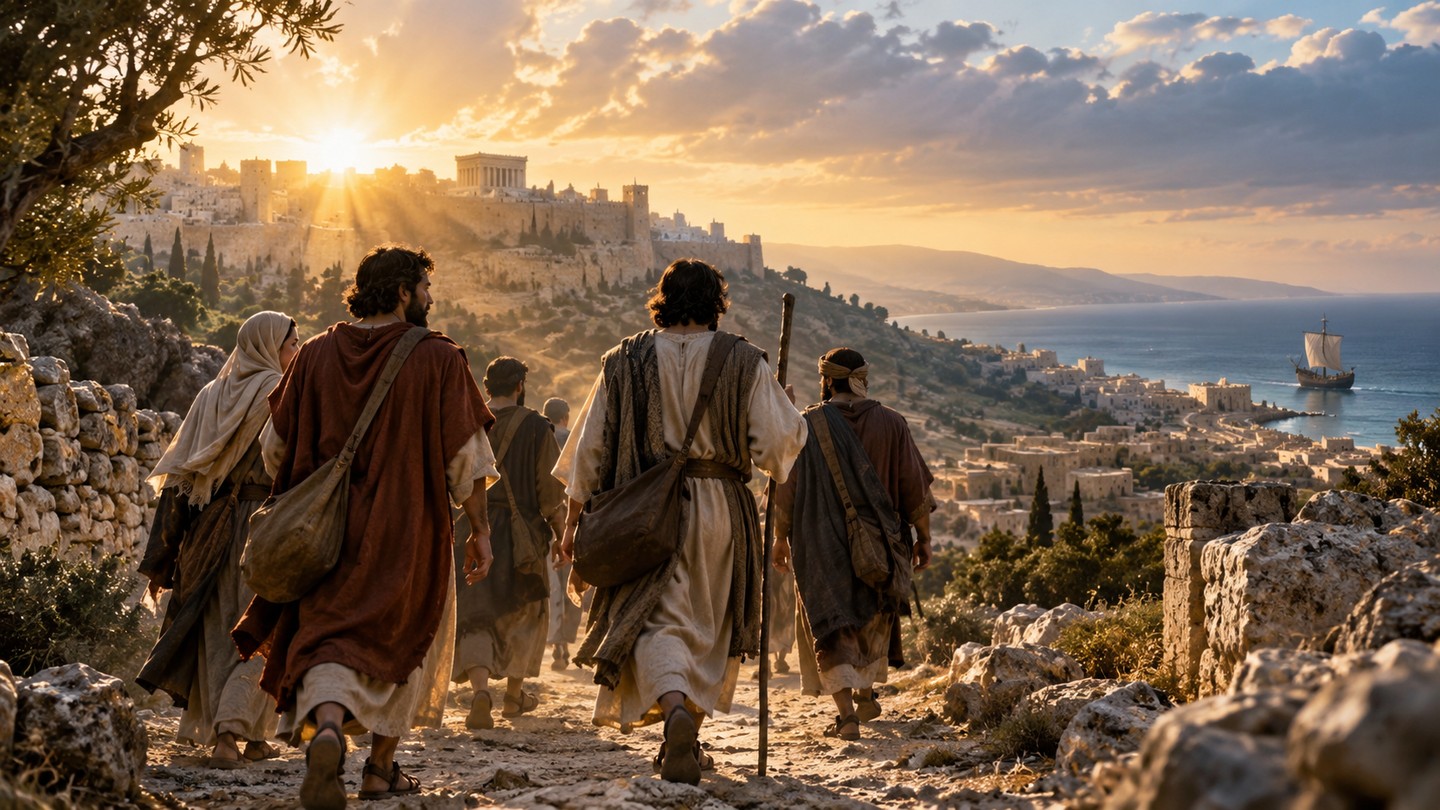
2Therefore when Paul and Barnabas had no small discord and discussion with them, they appointed Paul, Barnabas, and some others of them to go up to Jerusalem to the apostles and elders about this question.
3They, being sent on their way by the assembly, passed through both Phoenicia and Samaria, declaring the conversion of the Gentiles. They caused great joy to all the brothers.
4When they had come to Jerusalem, they were received by the assembly and the apostles and the elders, and they reported everything that God had done with them.
5But some of the sect of the Pharisees who believed rose up, saying, “It is necessary to circumcise them, and to command them to keep the law of Moses.”
6The apostles and the elders were gathered together to see about this matter.
7When there had been much discussion, Peter rose up and said to them, “Brothers, you know that a good while ago God made a choice among you that by my mouth the nations should hear the word of the Good News and believe.
8God, who knows the heart, testified about them, giving them the Holy Spirit, just like he did to us.
9He made no distinction between us and them, cleansing their hearts by faith.
10Now therefore why do you tempt God, that you should put a yoke on the neck of the disciples which neither our fathers nor we were able to bear?
11But we believe that we are saved through the grace of the Lord Jesus, just as they are.”
World English Bible (WEB) • Public Domain
Reflection
The early church faced a fierce question: must Gentile believers submit to the law of Moses, including circumcision, to be truly saved? The dispute threatened to pull the movement apart. Paul and Barnabas carried the controversy to the apostles and elders in Jerusalem, not to score points but to seek God’s truth for the church’s unity and mission.
Peter’s answer points to the heart of the matter. He reminds the assembly that God had already confirmed his acceptance of Gentiles by giving them the Holy Spirit and cleansing their hearts by faith. God’s action in their lives — not conformity to an inherited cultural rite — showed that salvation comes from God’s initiative. Peter then presses the point: why would we test God by trying to impose a heavy religious burden that neither our ancestors nor we could bear? His conclusion is simple and decisive: we are saved through the grace of the Lord Jesus.
Two things stand out for believers of every generation. First, salvation is God’s gift, received by faith in Christ, not earned by human rites or cultural conformity. That truth gives us assurance before God and humility toward one another. Second, the church must discern God’s work by the fruit of the Spirit and the witness of Scripture rather than by appealing to tradition or human standards alone. The Jerusalem council modeled a healthy way to decide: bring the dispute before the gathered church, listen to reports of God’s work, weigh the testimony of the Spirit, and let the gospel — the grace of Jesus — judge practices.
This passage is not only theological; it is profoundly practical for how Christians relate across cultural and personal differences. When we insist that people must meet our cultural expectations to be acceptable to Christ, we risk replacing the cross with human demands. When instead we recognize God’s sovereign work among those who are different from us, we open the door to welcome, reconciliation, and effective witness. The grace that saves us also reshapes our community so that it bears testimony to the world: we do not insist on barriers that Christ has removed.
So, live in the freedom that Christ earned. Hold fast to the truth that we are justified by grace through faith. Let that truth govern our conversations, our church policies, and the ways we receive new brothers and sisters. In controversies, seek evidence of the Spirit’s work and be willing to change practices that erect unnecessary burdens. Salvation by grace is not an abstract doctrine; it is the foundation for unity, mercy, and mission.
Putting Faith Into Action
- When a disagreement about practice or culture arises in your church or small group, ask first how the proposed requirement points people to Christ and whether the Spirit’s fruit is present among those affected.
- Practice radical hospitality: invite and listen to believers from different backgrounds, hear how God is working in their lives, and take one concrete step this month to welcome someone different from you into fellowship.
- Examine any teaching or expectation you hold that claims to be necessary for salvation—replace demands of human tradition with clear gospel markers like repentance, faith in Jesus, and the fruit of the Spirit.
Prayer
Lord Jesus, thank you that we are saved by your grace and not by our achievements. Give us humility to receive others as you have received us, wisdom to recognize your work among all peoples, and courage to remove needless burdens that hinder the gospel. Fill us with your Spirit so our unity and love point others to you. Amen.
Memory Verse
Acts 15:11 — But we believe that we are saved through the grace of the Lord Jesus, just as they are.” (WEB)
“But we believe that we are saved through the grace of the Lord Jesus, just as they are.””
Bible Context
Read all of Acts 15
+
Bible Context
Read all of Acts 15
Acts 15
World English Bible • WEB
1Some men came down from Judea and taught the brothers, “Unless you are circumcised after the custom of Moses, you can’t be saved.”
2Therefore when Paul and Barnabas had no small discord and discussion with them, they appointed Paul, Barnabas, and some others of them to go up to Jerusalem to the apostles and elders about this question.
3They, being sent on their way by the assembly, passed through both Phoenicia and Samaria, declaring the conversion of the Gentiles. They caused great joy to all the brothers.
4When they had come to Jerusalem, they were received by the assembly and the apostles and the elders, and they reported everything that God had done with them.
5But some of the sect of the Pharisees who believed rose up, saying, “It is necessary to circumcise them, and to command them to keep the law of Moses.”
6The apostles and the elders were gathered together to see about this matter.
7When there had been much discussion, Peter rose up and said to them, “Brothers, you know that a good while ago God made a choice among you that by my mouth the nations should hear the word of the Good News and believe.
8God, who knows the heart, testified about them, giving them the Holy Spirit, just like he did to us.
9He made no distinction between us and them, cleansing their hearts by faith.
10Now therefore why do you tempt God, that you should put a yoke on the neck of the disciples which neither our fathers nor we were able to bear?
11But we believe that we are saved through the grace of the Lord Jesus, just as they are.”
12All the multitude kept silence, and they listened to Barnabas and Paul reporting what signs and wonders God had done among the nations through them.
13After they were silent, James answered, “Brothers, listen to me.
14Simeon has reported how God first visited the nations to take out of them a people for his name.
15This agrees with the words of the prophets. As it is written,
16‘After these things I will return.
17that the rest of men may seek after the Lord:
18“All of God’s works are known to him from eternity.
19Therefore my judgment is that we don’t trouble those from among the Gentiles who turn to God,
20but that we write to them that they abstain from the pollution of idols, from sexual immorality, from what is strangled, and from blood.
21For Moses from generations of old has in every city those who preach him, being read in the synagogues every Sabbath.”
22Then it seemed good to the apostles and the elders, with the whole assembly, to choose men out of their company, and send them to Antioch with Paul and Barnabas: Judas called Barsabbas, and Silas, chief men among the brothers.
23They wrote these things by their hand:
24Because we have heard that some who went out from us have troubled you with words, unsettling your souls, saying, ‘You must be circumcised and keep the law,’ to whom we gave no commandment;
25it seemed good to us, having come to one accord, to choose out men and send them to you with our beloved Barnabas and Paul,
26men who have risked their lives for the name of our Lord Jesus Christ.
27We have sent therefore Judas and Silas, who themselves will also tell you the same things by word of mouth.
28For it seemed good to the Holy Spirit, and to us, to lay no greater burden on you than these necessary things:
29that you abstain from things sacrificed to idols, from blood, from things strangled, and from sexual immorality, from which if you keep yourselves, it will be well with you. Farewell.”
30So, when they were sent off, they came to Antioch. Having gathered the multitude together, they delivered the letter.
31When they had read it, they rejoiced over the encouragement.
32Judas and Silas, also being prophets themselves, encouraged the brothers with many words and strengthened them.
33After they had spent some time there, they were dismissed in peace from the brothers to the apostles.
35But Paul and Barnabas stayed in Antioch, teaching and preaching the word of the Lord, with many others also.
36After some days Paul said to Barnabas, “Let’s return now and visit our brothers in every city in which we proclaimed the word of the Lord, to see how they are doing.”
37Barnabas planned to take John, who was called Mark, with them also.
38But Paul didn’t think that it was a good idea to take with them someone who had withdrawn from them in Pamphylia, and didn’t go with them to do the work.
39Then the contention grew so sharp that they separated from each other. Barnabas took Mark with him and sailed away to Cyprus,
40but Paul chose Silas and went out, being commended by the brothers to the grace of God.
41He went through Syria and Cilicia, strengthening the assemblies.
World English Bible (WEB) • Public Domain
Share Frontline Faith
Share this devotional
Copy the public link to share this devotional.